How Parents and Kids Build Habits Together
Updated July 1, 2026
Parents and kids build good habits best when they do it together, not when one side polices the other. Pick a shared goal, model the behavior you want, check in with each other regularly, and celebrate small wins out loud. Two-way accountability — where grown-ups have habits to keep too — turns nagging into teamwork.
Why doing it together beats top-down rules
Children copy what they see far more than what they are told. When a parent works on their own habit alongside a child — reading nightly, moving daily, putting the phone away at dinner — the habit stops feeling like a punishment and starts feeling normal. Shared effort also gives kids a sense of fairness: the rules apply to everyone, so cooperation replaces resistance.
Two-way accountability matters because motivation is contagious in both directions. A kid who sees a parent miss a workout can gently remind them, and a parent can do the same. That mutual nudge builds connection and removes the lopsided dynamic where one person manages and the other simply complies.
Set one shared goal and make it specific
Start with a single habit the whole family genuinely cares about, then make it concrete. "Be healthier" is vague; "a 15-minute family walk after dinner, five nights a week" is something everyone can picture and measure. Specific, small, and repeatable beats ambitious and fuzzy every time.
Let kids help choose the goal. People — children especially — commit harder to plans they helped create. Sit down together, agree on what success looks like this week, and write it somewhere everyone sees daily. A goal you can both name is a goal you can both keep.
Model the behavior and keep mutual check-ins
Modeling is the most powerful teaching tool you have. If you want your child to read before bed, read your own book in view. If you want less screen time, narrow yours first. Kids notice the gap between instructions and actions, and they close that gap by copying what you actually do.
Pair modeling with short, judgment-free check-ins. A two-minute chat — "How did your habit go today? Here's how mine went" — keeps both people honest without nagging. When a parent shares their own slip-ups too, the child learns that missing a day is normal and recoverable, not a reason to quit.
Celebrate small wins and reward effort, not just results
Habits stick when progress feels good immediately. Notice and name the small wins out loud — "You remembered three days in a row" — because specific praise reinforces the exact behavior you want to see again. Waiting for a big finish line means most of the journey goes unrewarded.
Reward effort and quality, not only completion. A child who tried hard on a tough day deserves recognition even if the result was imperfect. This protects motivation on the hard days, when habits are most fragile, and teaches that showing up consistently is the real skill being built.
Make progress visual and a little playful
Abstract goals are easy to forget; visible progress is hard to ignore. A wall chart, a sticker streak, or a simple progress bar turns an invisible habit into something the whole family can watch fill up. Seeing the gap between where you are and where you're going is one of the strongest natural motivators there is.
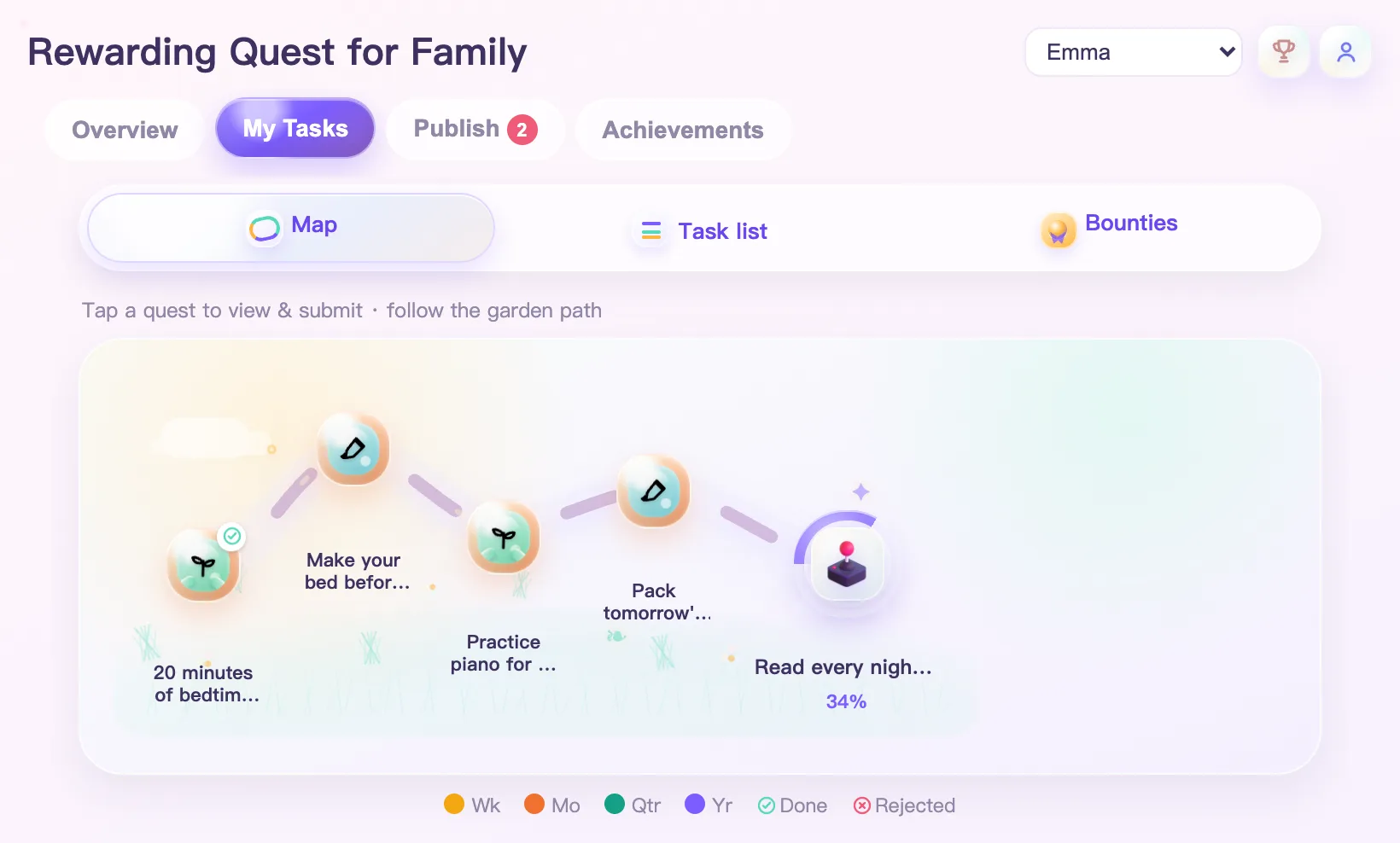
Add a light competitive or game-like element if your family enjoys it. Friendly point-scoring, weekly streaks, or small collectible milestones make the routine fun rather than a chore. The playfulness is not the point — it's the hook that keeps everyone coming back long enough for the habit to become automatic.
How Rewarding Quest for Family puts mutual motivation to work
If you want a single place to run all of this, Rewarding Quest for Family is a whole-family goal app built around the idea that parents have goals too — not just kids. Everyone in the household sets their own goals, and each one fills toward 100 points with a live progress bar, so progress stays visual and shared rather than hidden in someone's head.
It turns the advice above into everyday routine: a 1-5 star approval system rewards effort and quality instead of just "done," a single weekly leaderboard puts grown-ups and kids side by side, and collectible weekly, monthly, and yearly badges mark small wins. "Dream goals" let kids and parents propose their own habits for approval, and a shared activity feed plus reminders keep the mutual check-ins going.
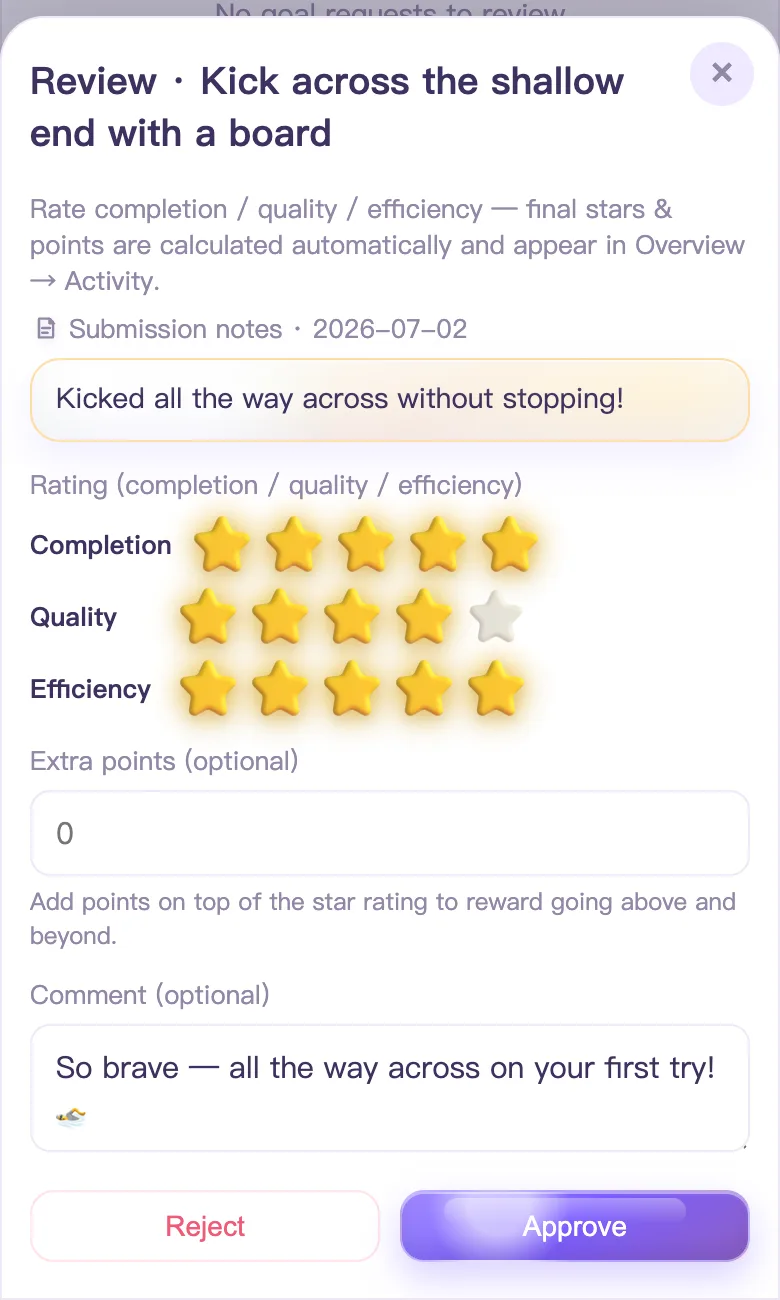
It runs in any browser as an installable web app, works in English, Chinese, and French, and starts with a 7-day free trial with no card required. The point isn't the gamification — it's working as a family accountability app that gives every family member, parents included, a fair and visible way to keep each other accountable.
Frequently asked questions
How can parents and kids motivate each other to build good habits?
Do it together rather than top-down. Choose a specific shared goal, have the parent model the behavior, and hold short two-way check-ins where both sides report honestly. Celebrate small wins out loud, reward effort and not just completion, and make progress visual with a chart or progress bar. Mutual accountability — where parents have habits too — turns nagging into teamwork.
Should parents work on their own habits too, or just guide their kids?
Parents should absolutely have their own goals. Children learn habits mainly by watching adults, so modeling the behavior you want is your strongest tool. When grown-ups visibly pursue and sometimes miss their own habits, kids see that effort and recovery are normal. This two-way accountability also feels fairer, which reduces resistance and makes cooperation far more likely to last.
How do I motivate my child without nagging?
Replace reminders with structure and shared ownership. Let your child help choose the goal so they feel committed, make progress visible so the chart does the reminding, and use brief mutual check-ins instead of repeated prompts. Praise specific effort rather than scolding misses. When the system and the visible progress carry the motivation, you rarely need to nag at all.
What's the best way to reward kids for building habits?
Reward effort and consistency, not just finished results. Specific, immediate praise — naming exactly what they did well — reinforces the behavior most effectively. Small, frequent recognition like points, streaks, or collectible milestones beats one big distant prize, because habits are most fragile day to day. A 1-5 star style of scoring also signals that quality and trying hard both count.
How long does it take for a new family habit to stick?
It varies by person and how complex the habit is, so focus on consistency rather than a fixed number of days. The reliable predictors are a small, specific goal, daily visible progress, and frequent small wins that keep motivation alive on hard days. Track it together, expect occasional missed days, and treat getting back on track quickly as the real measure of success.
Can a single app help the whole family build habits together?
Yes. Rewarding Quest for Family is built for the whole household — parents set their own goals alongside kids, everyone shares one weekly leaderboard, and goals fill toward 100 points with live progress bars. A 1-5 star approval system rewards effort, badges mark milestones, and a shared feed keeps mutual check-ins going. It runs in any browser with a 7-day free trial, no card required.
What ages does this work for?
It's best for kids aged 6–12, and it works for teens and parents too. Parents set their own goals alongside the kids rather than just supervising, so every age group has something real to work toward. Younger kids do well with simple recurring routines, while teens and adults take on bigger goals — everyone shares the same leaderboard and progress bars.
More questions about plans, roles, or setup? See the full FAQ.
7-day free trial (no card required), then C$3.99/month for up to 5 people; each additional 5 people is +C$3.99/month. Quarterly billing = 3× the monthly price; yearly = 20% off.
